
Hummingbirds - Winged Jewels of Your Garden
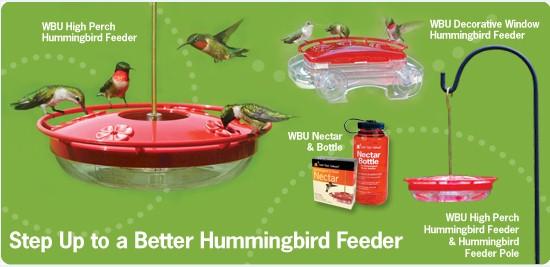
World's Best Feeder: No Bees • No Ants • No Dripping
Stop by our store, or shop online by clicking the "Shop Now" button above.
Hummingbird Season in Illinois
In our area, hummingbird season kicks off with a few birds trickling in starting mid to late April, though most hummers won't arrive until May. In June, when females are incubating eggs, hummingbirds will still visit feeders, but overall activity at feeders will slow a bit since their energy needs aren't as high. As babies grow, activity rises again in mid-late July, then it peaks to crazy levels of activity in August and September when all the young and old birds attempt fuel up before they head off on fall migration. Visits slowly taper off through the end of October*.
(*Despite the old wives tales, keeping a hummingbird feeder up late in the season will NOT keep hummers from migrating. Migration is triggered primarily by light and the shortening day length, not food sources. While activity slows dramatically in October, a few birds are always seen late in the month and feeders can give these birds a boost, especially if chilly weather makes natural foods harder to find. We recommend keeping hummingbird feeders up until Halloween.)
Habitat
Ruby-Throated Hummingbirds are found in most habitats across Illinois, including backyards. Heavily wooded, natural areas will have the highest number of birds, but even people living in newly developed subdivisions can still attract hummingbirds. Offering nectar feeders and nectar-producing plants will help you maximize the number of hummingbirds that visit your yard.
Recommended Feeders - No Bees! No Ants! No Drips! SHOP ONLINE
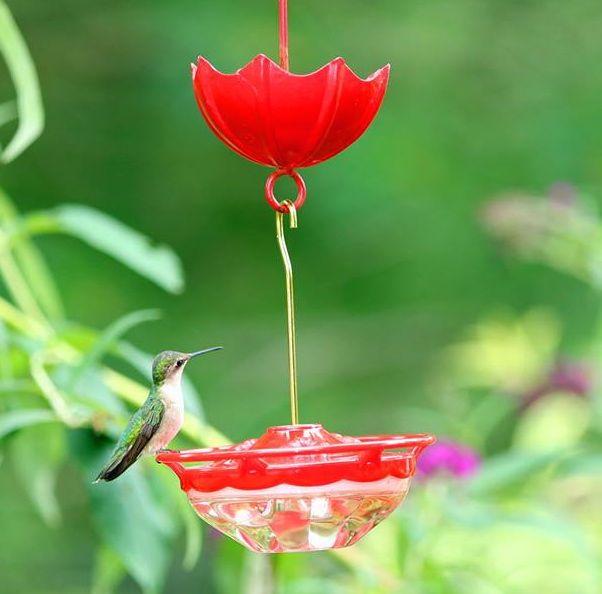 We recommend using the Wild Birds Unlimited High-Perch Hummingbird Feeder (available in four sizes/models) to attract the most hummingbirds to your yard.
• Designed to appeal to hummingbirds, this feeder allows them to hover or perch while feeding.
• The no-bottle, saucer-style design can not leak or drip and is easy to clean.
• Bees can’t access the nectar solution, and the built-in ant moat deters ants.
• Optional Nectar Tips can be added to exclude tiny flies/gnats in areas where they are a concern.
• The feeder is extremely easy to clean.
• Made in the USA
• Lifetime guarantee.
 Tips and Recommended Accessories
• Hanging/Mounting Hooks - choose from Shepherds hooks sized just right for hummer feeders, window mount suction cup brackets, deck rail brackets, and "S" hooks in many sizes.
For best viewing, place feeders where they are easy to see, but not too close to other busy feeders where activity from larger birds could intimidate the smaller hummingbirds. Hanging feeders in trees may not be the best options since the leaves can make it harder for birds to notice the feeders.
Hummingbirds don't share well, even with one another, so placing multiple feeders out of sight of one another can reduce quarreling and help you attract more birds. Select items available online, many more in-store.
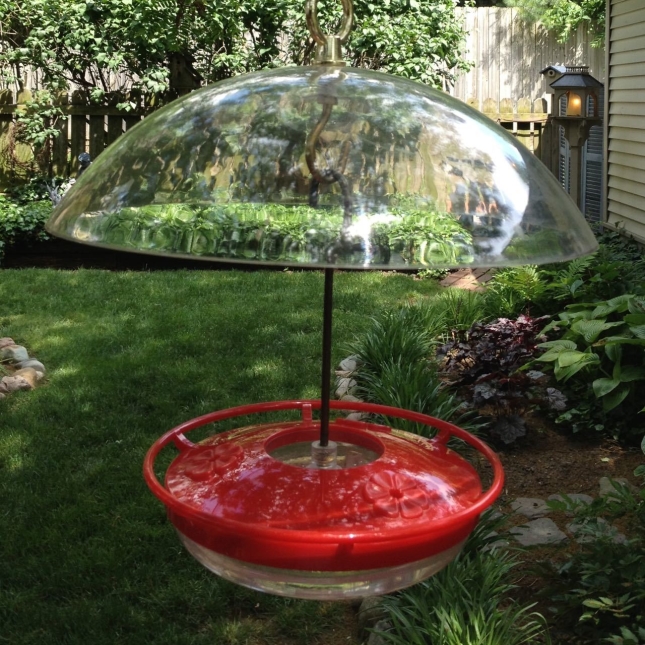
• Rain Shields act as umbrellas to keep rain from diluting the hummingbirds' nectar. SHOP ONLINE
• Nesting Balls - filled with natural fibers hummingbirds can use to help build their nests SHOP ONLINE
• Hummingbird Food, Nectar (3 options):
SHOP ONLINE
1 - Our no-boil, powdered nectar mix contains no dyes (dyes are never recommended) and is simple to make, just stir into lukewarm tap water.
2 - Naturally Fresh™ Liquid Hummingbird Nectar Concentrate (with Nectar Defender™ already built in) mixes quickly with water and stays fresh in a feeder for a week.
3 - Mix up your own nectar by boiling water and then mixing in table (cane) sugar at a 4:1 ratio. (Use our nectar Mixing Bottle to mix it up quickly, and then to store the extra in the refrigerator.)
Depending on temperatures, clean nectar feeders every two to three days; then fill with fresh nectar solution.
Never use food color, honey, "raw" sugar, or artificial sweeteners or nectars containing colors, flavors, or vitamins. Research has shown hummingbirds don't need these additives and some items can actually prove dangerous.
Change nectar every 2-3 days to keep bacteria from growing to dangerous levels.
Failure to change nectar often enough is the #1 reason people fail to keep hummingbird coming to their feeders.
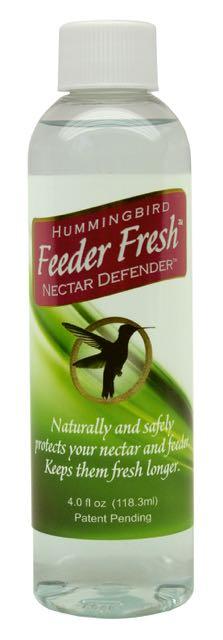 • Feeder Fresh Nectar Defender™!
Make feeder maintenance easier and extend the life of nectar from 2-3 days to 7-10 days. Nectar defender uses micronutrient copper (copper is a normal part of hummingbirds' diet) to slow mold and bacteria growth. Add 1 Tbls per quart of nectar. SHOP ONLINE
We also carry Naturally Fresh™ Hummingbird Nectar Concentrate with Nectar Defender™ already built in.
• Use a Wild Birds Unlimited Nectar Port Brush to keep your feeder clean and presentable for hummingbirds. SHOP ONLINE
• Keep ants out of non-WBU nectar feeders with the Nectar Protector Ant Moat, which uses water as safe barrier most ants won't cross. We do not recommend ant guards that contain pesticides.
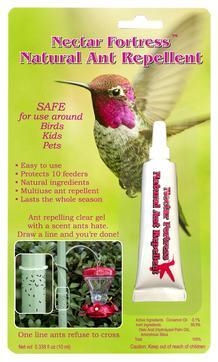
• Nectar Fortress Ant Repellent is another safe, non-chemical way of protecting feeders. It uses a gel made of food-based ingredients, ones ants don't like the scent of. Simply use the gel to create a barrier on the pole or hook on which the feeder hangs.
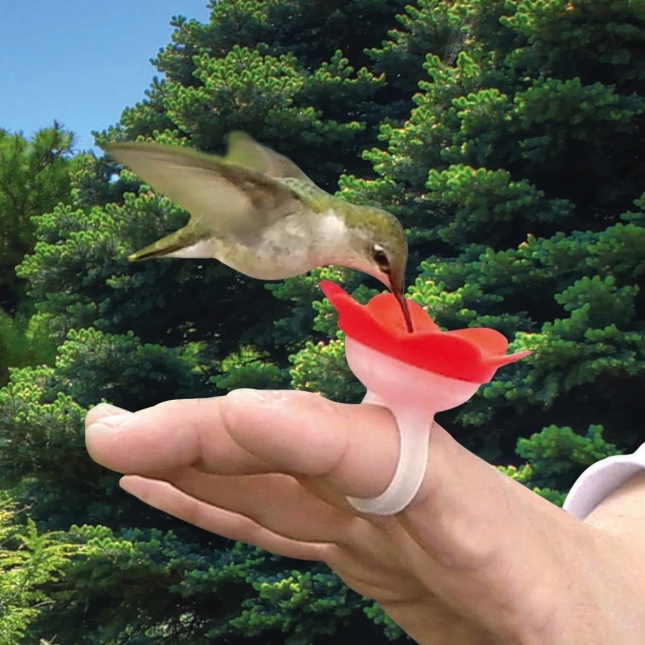
• Hummer Rings! Yes, they really work to feed hummingbirds right from your hand. 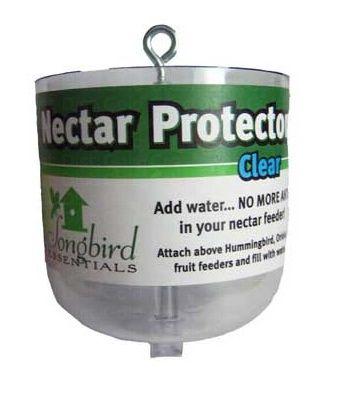
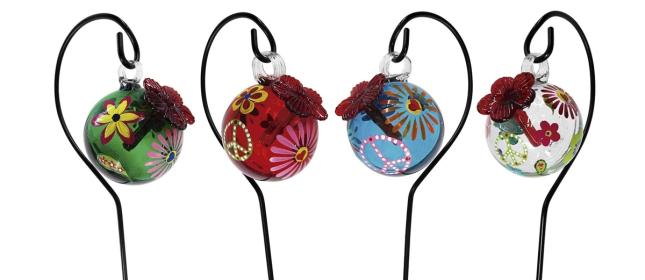
Decorative feeders.
We have a wide selection of feeders that are both functional and good looking. These no-drip "Peace" feeders are hand-painted on blown glass.
Stopping Starlings and Grackles How to keep starlings and grackles away from your bird food.
learn more